Use total scattering when Bragg peaks alone do not tell the full story. By retaining both sharp diffraction features and diffuse intensity, the method is powerful for materials with disorder, defects, nanostructure, amorphous components, or mixed local and average structure behaviour.
Measurement technique
Total scattering
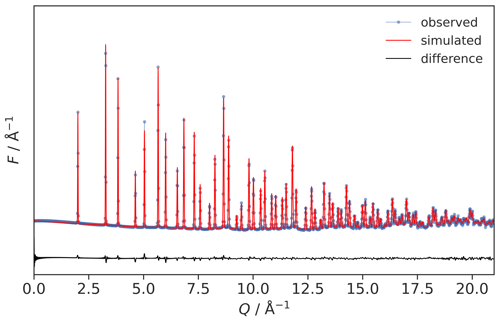
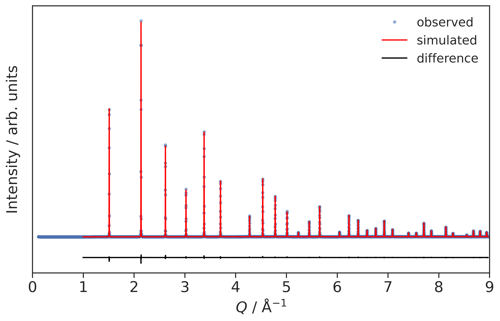
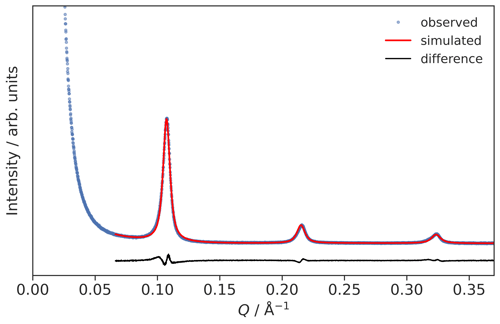
Total scattering (TS) goes beyond typical assessment of diffraction peaks to consider the diffuse intensities scattered underneath and in between. These carry further information about defects, disorder, dynamics, and morphology that underpin functional properties.
What information do you get out of it?
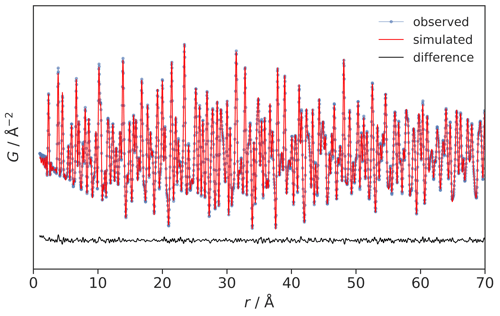
Total scattering reveals how local order differs from the long-range average structure and helps detect effects that conventional diffraction can miss. It is valuable for studying disorder, defect populations, nanoscale domains, amorphous fractions, and structural heterogeneity in functional materials where diffuse intensity carries important physical information.
Deliverables
Reduced total scattering data prepared for downstream analysis
Calibrated reciprocal-space output suitable for PDF transformation
Experimental report with acquisition details and reduction summary
Optional add-on analysis combining total scattering with PDF or diffraction workflows
Ready to get started?
Use TS in your next measurement campaign
Send your samples, choose the workflow that fits your material, and we will handle measurement, processing, and delivery.