Use PDF when you need a real-space view of structure and local coordination. It is particularly effective for nanomaterials, disordered solids, amorphous phases, and systems where average crystallographic models are incomplete or misleading on their own.
Measurement technique
Pair distribution function
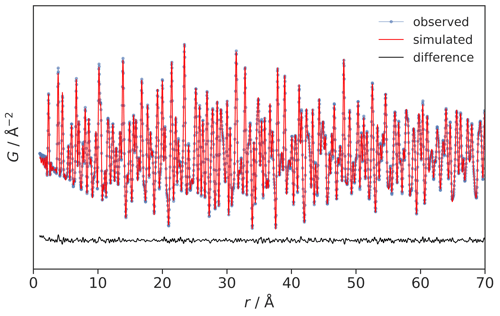
The pair distribution function (PDF) analysis gives an alternative perspective to the total scattering signal by transforming the data to a spatial dependence, allowing properties such as bond lengths, correlated motions, and local structural features to be observed directly.
What information do you get out of it?
PDF analysis shows how atoms are arranged over short and intermediate distances, making bond lengths, coordination shells, correlated disorder, and nanoscale structural coherence directly accessible. It helps distinguish local distortions from average structure and is especially useful when conventional refinement becomes unreliable because of small domains or disorder.
Deliverables
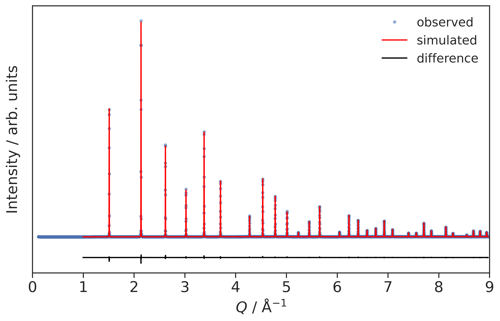
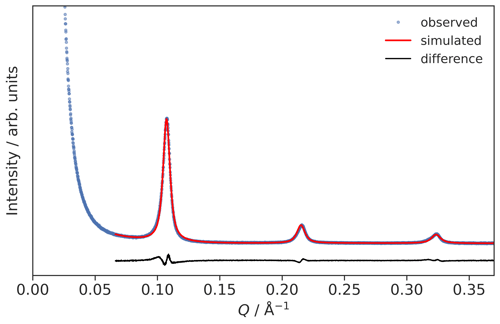
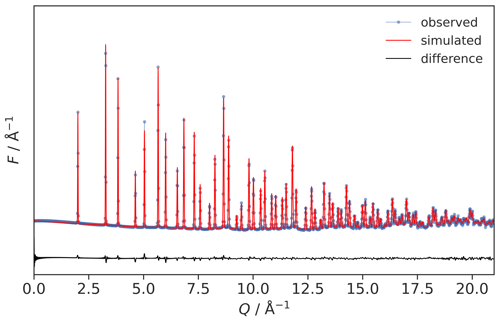
Reduced total scattering data and transformed PDF output
Experimental report with reduction parameters and quality summary
Files ready for qualitative PDF assessment or refinement workflows
Optional add-on analysis including PDF modeling and real-space refinement
Ready to get started?
Use PDF in your next measurement campaign
Send your samples, choose the workflow that fits your material, and we will handle measurement, processing, and delivery.