Nanocatalyst Phase Quantification
Phase identification & quantification for supported nanocatalysts
Measure your first 5 samples for free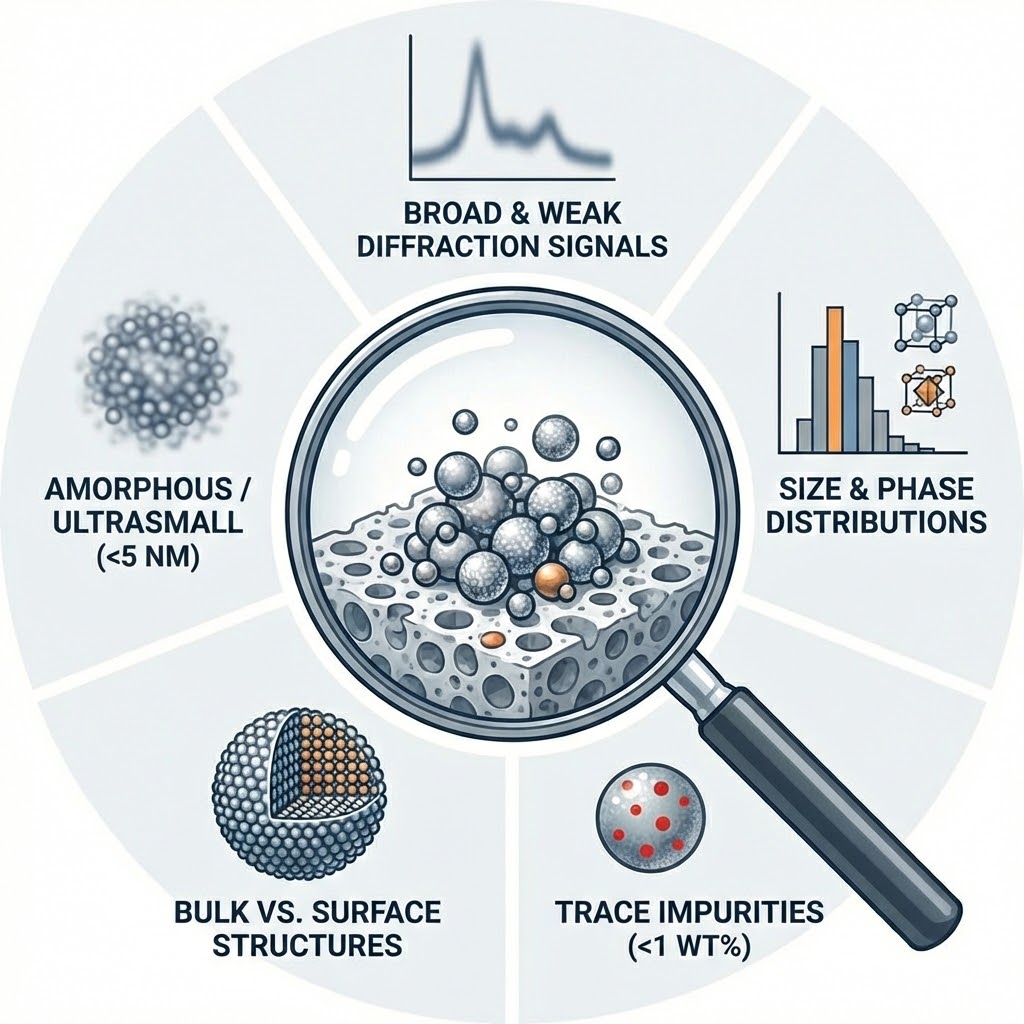
Challenges
-
Ultrasmall nanoparticles on porous supports
Detecting ultrasmall nanoparticle species dispersed on porous supports is extremely difficult with standard diffraction techniques.
-
Distinguishing structure types
Distinguishing structure types for different metals and metal-oxides with varying degrees of solid solution requires data quality well beyond conventional XRD.
-
Size distributions and surface effects
Quantifying effects of size distributions and bulk versus surface effects requires methods sensitive to local coordination environments.
Example: NiCoPtOx nanoparticles on hollow carbon support
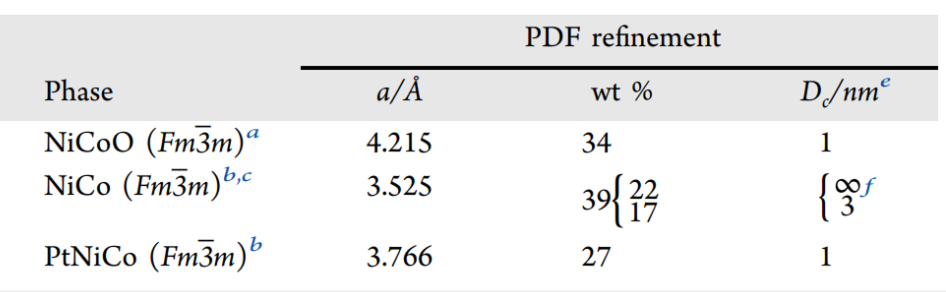
Bi(Tri)-metallic transition metal composites including NiCoOx and NiCoPtOx nanoparticles show good performance for HER/OER activity in alkaline environments offering a promising replacement for typical catalysts with much higher Pt content. However, the ultrasmall sizes and complex metal distribution lead to difficulties in phase characterization.
Results
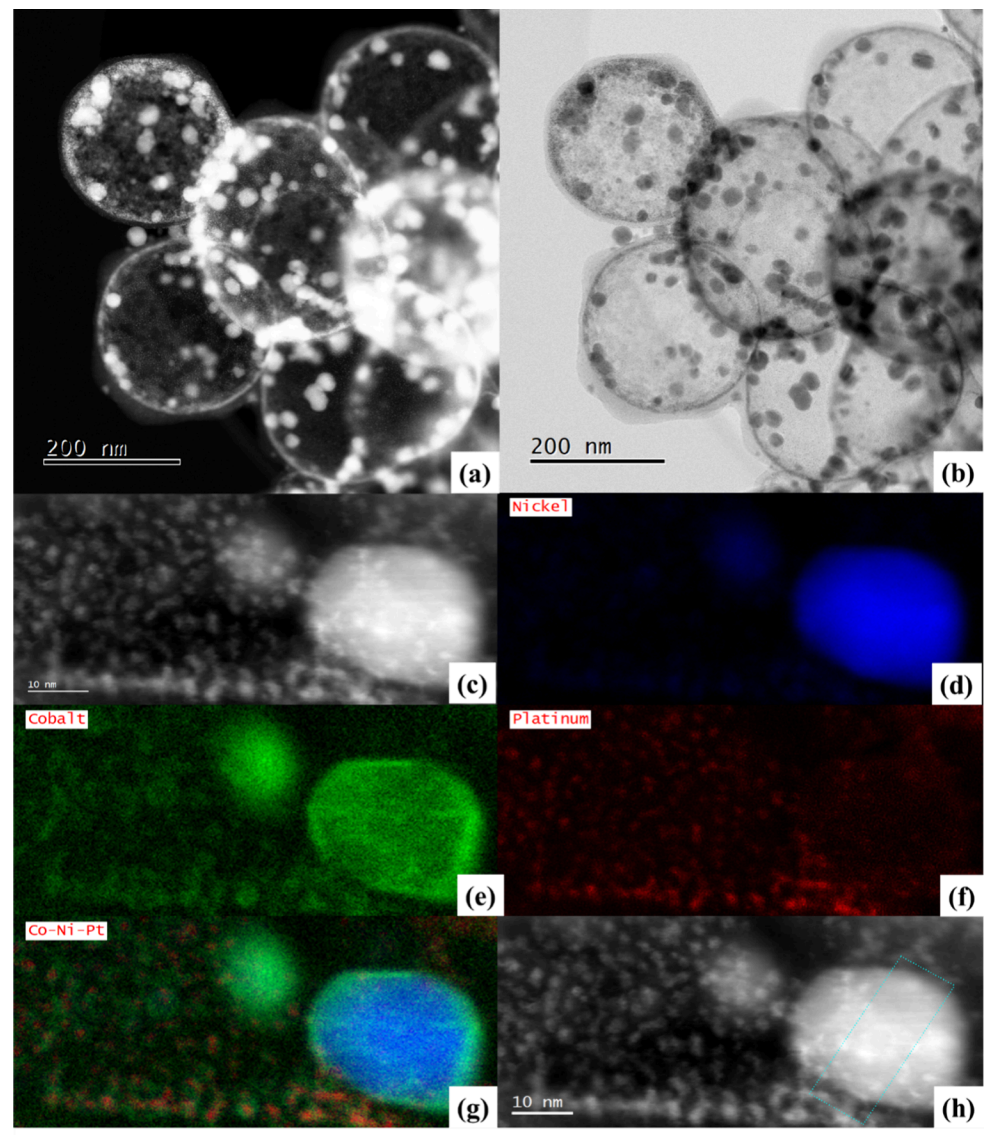
NiCoPtOx nanoparticles on hollow carbon support. Mashindi et al. ACS Appl. Energy Mater. (2025), 8, 16868−16879.
License: CC BY 4.0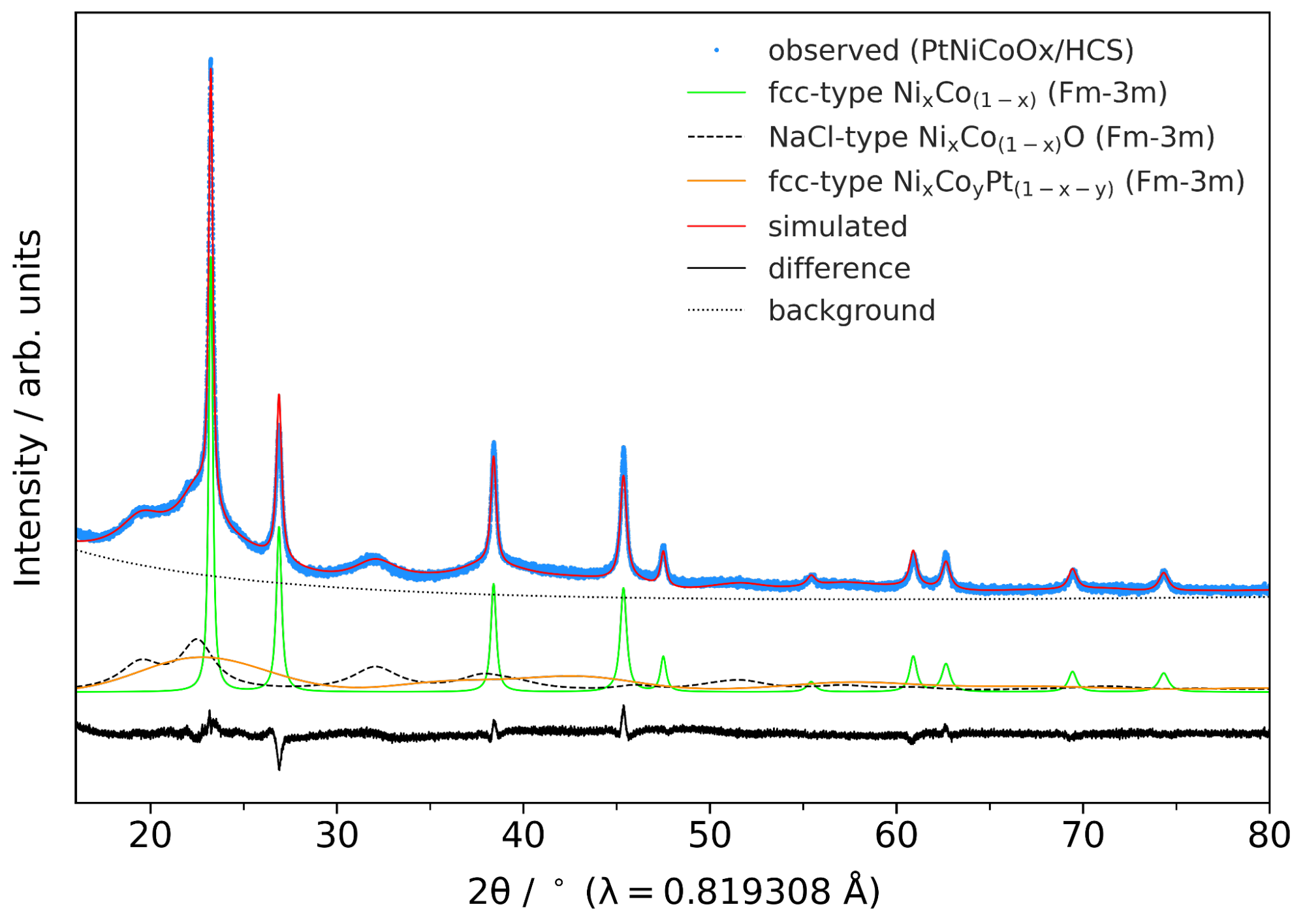
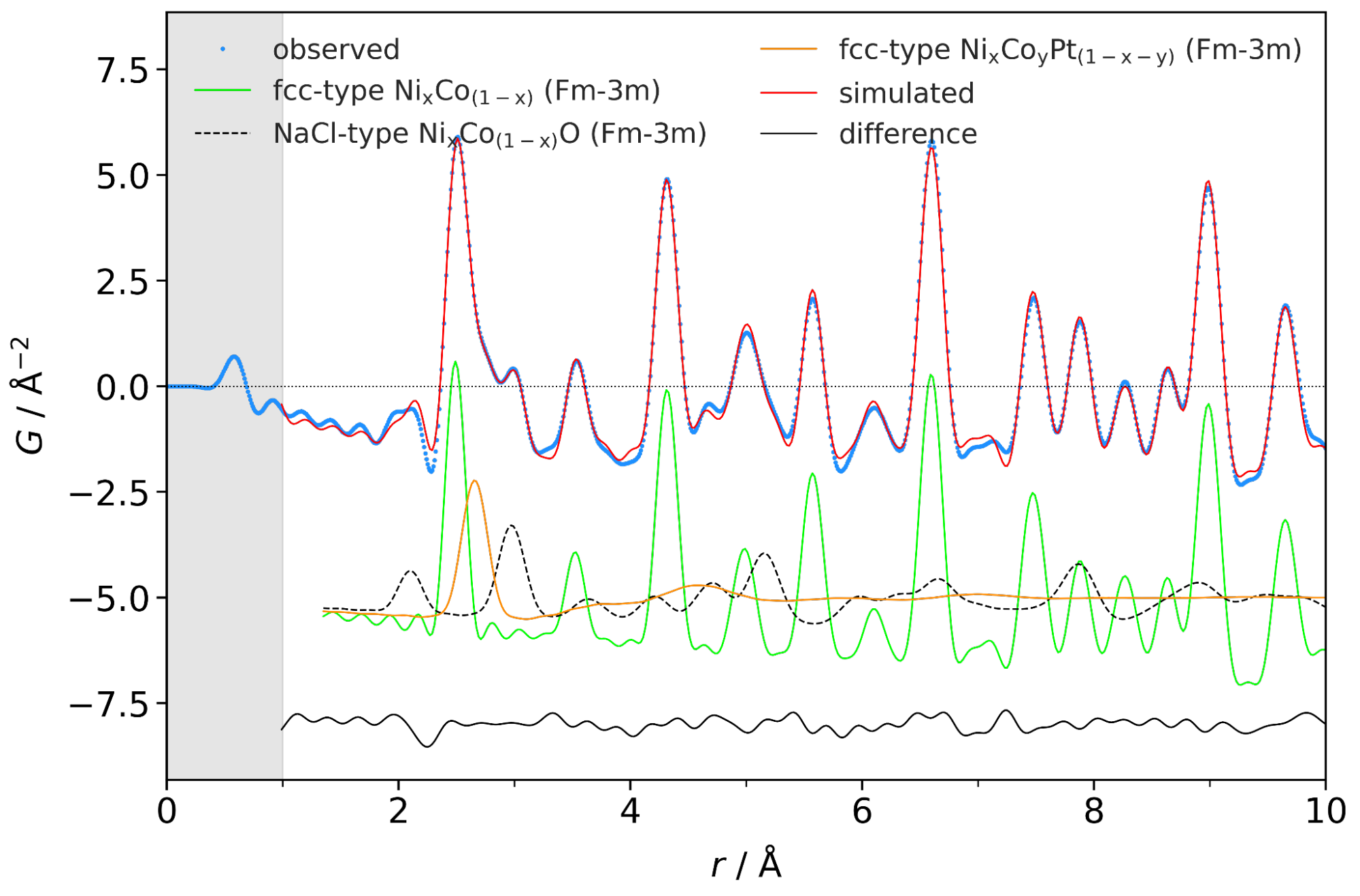
Dual space phase identification using HR-XRPD (left) and pair distribution function analysis (right).
License: CC BY 4.0Dual space phase identification using a combination of high-resolution X-ray powder diffraction and pair distribution function analysis leads to more reliable phase determination and quantification results. Total scattering leads to higher sensitivity to detect ultrasmall nanoparticles, surface layers, and amorphous phases.
Total scattering leads to higher sensitivity to detect ultrasmall nanoparticles, surface layers, and amorphous phases.
Problems with standard analysis method
Accuracy of Rietveld refinement breaks down for nanoparticles
- Continuous profiles are not well described by the assumption of discrete diffraction lines.
- Virtual crystal models are not necessarily a good representation of the true structure.
Diffuse scattering difficult to partition
- Scattering from surface structuring and defects is intractable but non-negligible.
- Diffuse scattering from ultrasmall domains makes identification often impossible and ambiguous at best.
Benefits of our method
Real space assessment sensitivity
-
Real-space sensitivity
Maintains sensitivity to coordination environments regardless of domain size—more robust against microstructural complexities.
-
Direct coordination view
Enables direct view to local coordination species independent of structure model, e.g. direct view to metal coordination of Pt species in disordered phases.
-
Dual-space phase identification
Combining HR-XRPD with PDF analysis leads to more reliable phase determination and quantification results than either method alone.
Explore more applications
Mineral Detection & Quantification
Quantifying mineral species in mining and geological samples
Single Atom Catalyst Detection
Detecting single atom catalysts via the difference pair distribution function method
High-Throughput Battery Characterization
High-throughput characterization of battery materials
Ready to characterize your materials?
Get synchrotron-quality X-ray data for your application—no proposals, no beamline scheduling.