High-Throughput Battery Characterization
High-throughput characterization of battery materials
Measure your first 5 samples for free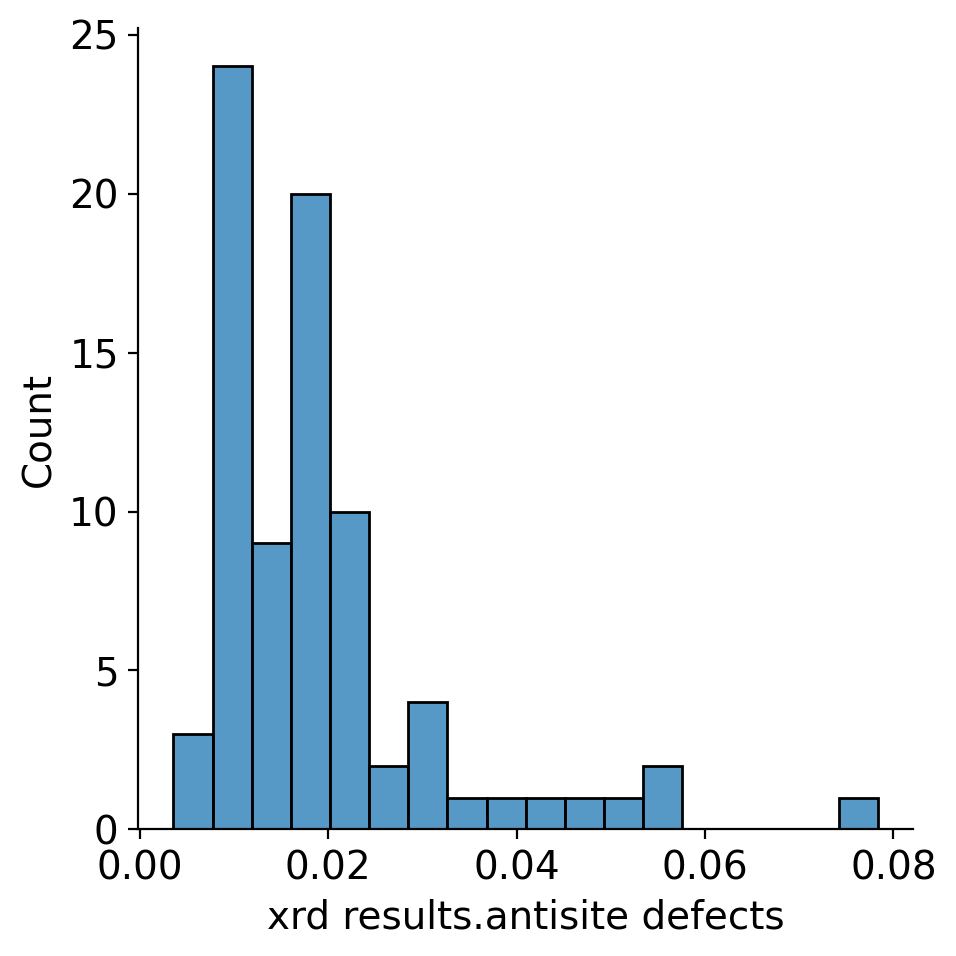
Subtle structural property changes and defects have appreciable impacts on sample performance and processing requirements. A detailed characterization of these effects with statistical significance can greatly enhance the efficacy of product and process optimization decision making.
Example: NMC antisite defect analysis across processing conditions
High-resolution X-ray powder diffraction measurements were performed on approximately 80 samples of NMC processed by various groups under different conditions. Sequential Rietveld refinement determined Ni-Li antisite defect density (known to affect the performance of the material in a cathode). Systematic evaluation using a random forest model was carried out to find correlations between process parameters and antisite defect density.
Antisite defect distribution across samples.
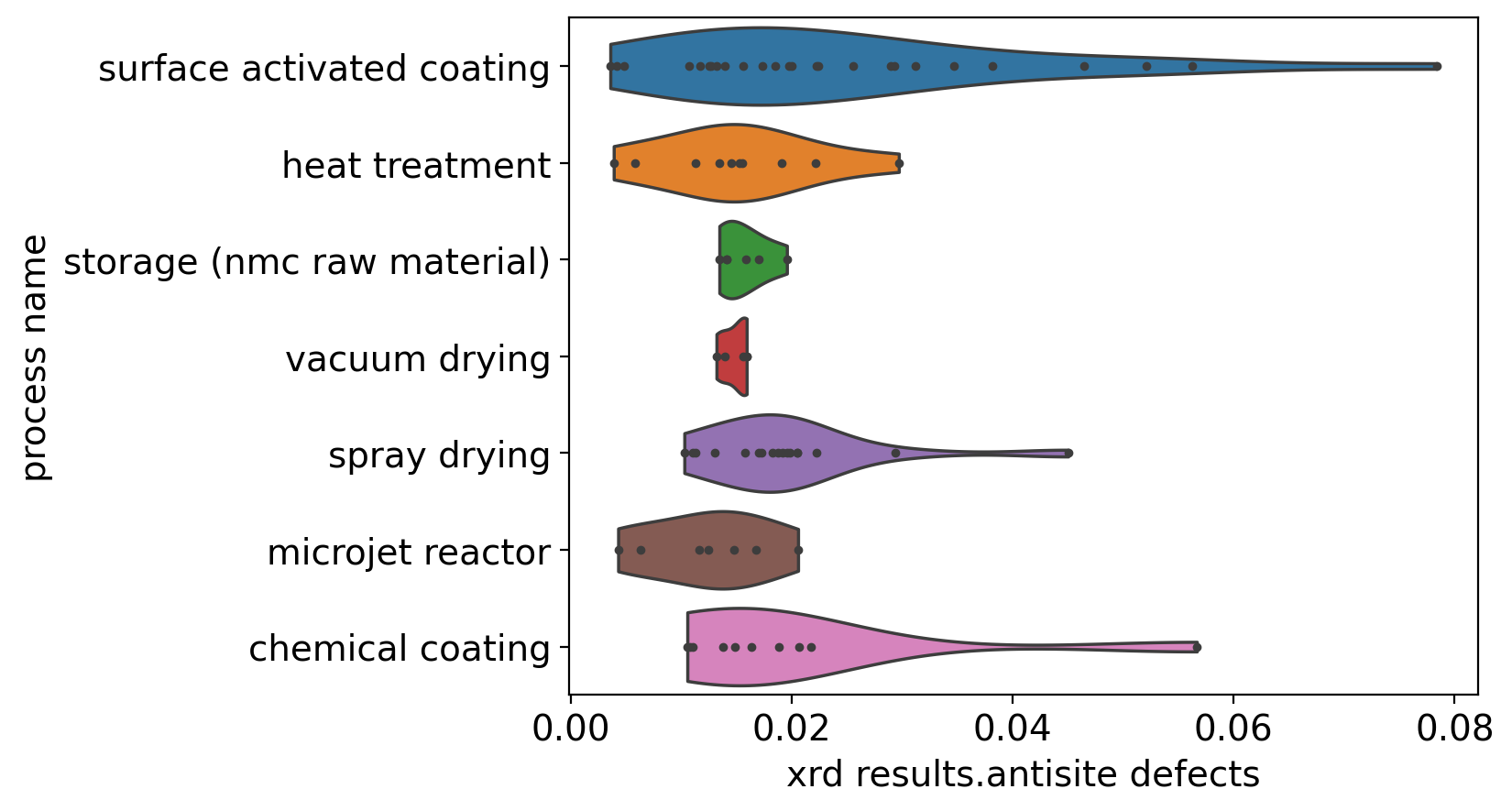
Antisite defect values obtained across different process steps.
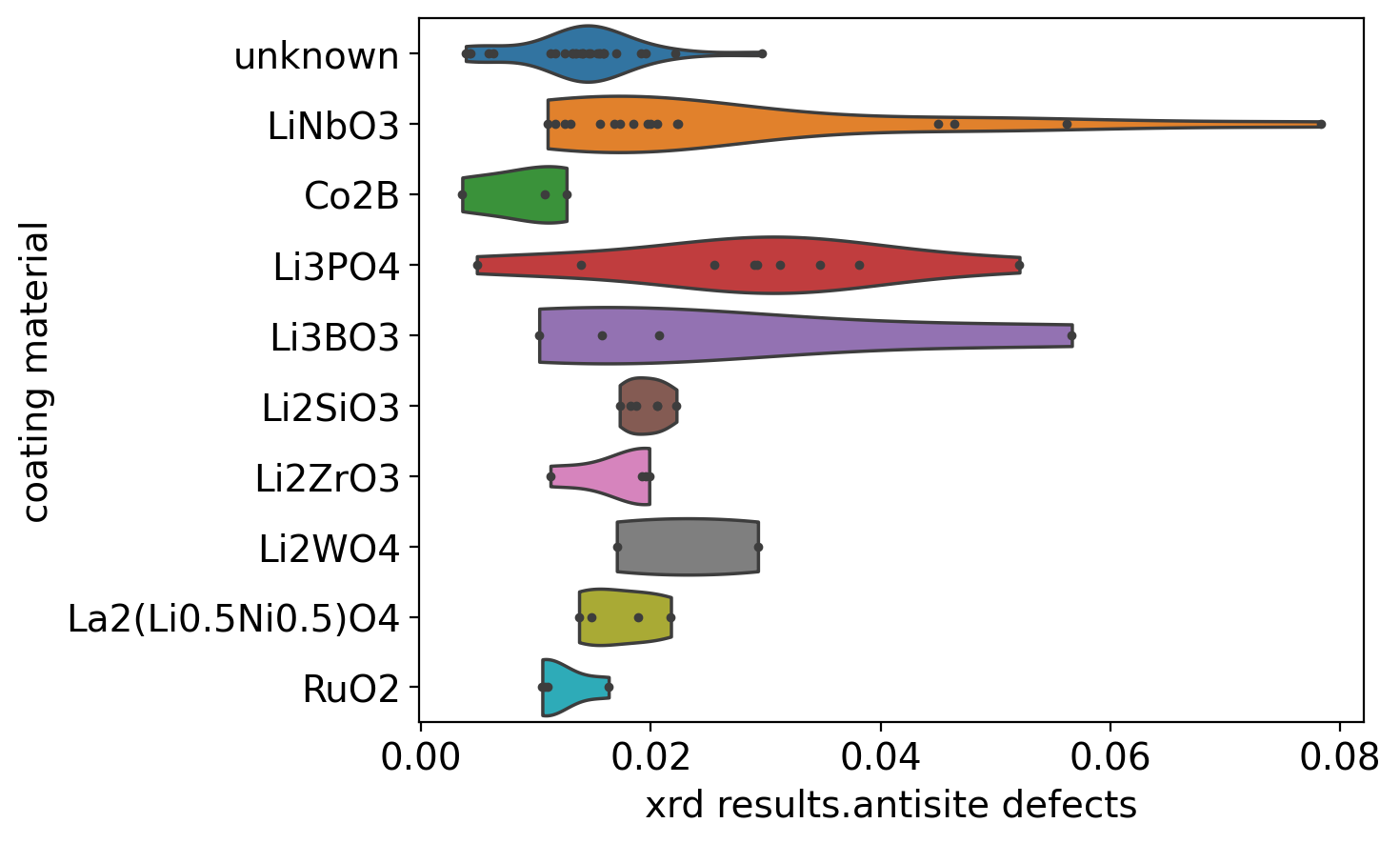
Antisite defect values obtained across different coatings.
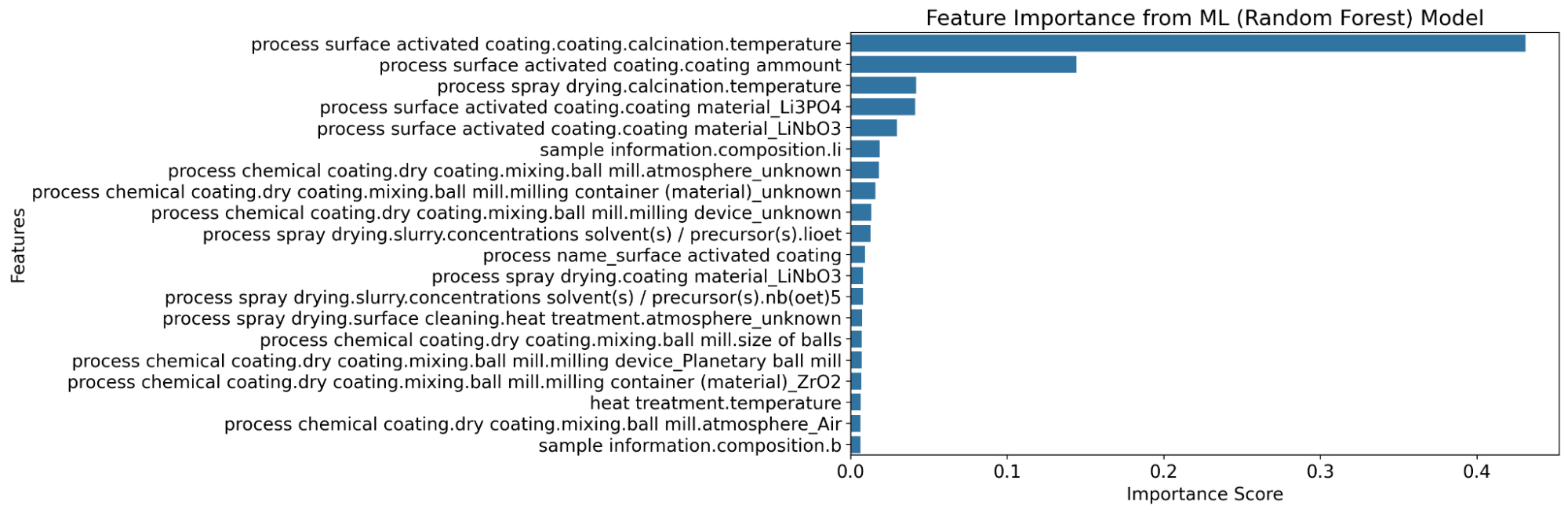
Which feature (processing parameter) has the greatest effect on antisite defects? The top 20 most important features from the random forest model: higher score equals higher importance. The results indicate that the processes of the surface activate coating are most important to the resulting antisite defect levels present. The top two contributors are calcination temperature (most important) and the coating amount (second most important).
Key findings
The processes of the surface-activated coating are most important to the resulting antisite defect levels present.
The top two contributors are calcination temperature (most important) and the coating amount (second most important).
Random forest feature importance analysis identifies which processing parameters have the greatest effect on antisite defects.
Benefits of our method
-
Statistical significance at scale
Process ~80+ samples in a single campaign to achieve statistically significant structural characterization across processing conditions.
-
Correlate structure with process
Systematic evaluation using machine learning models finds correlations between process parameters and structural defect properties.
-
Actionable optimization
Feature importance analysis identifies which processing parameters have the greatest effect—directly guiding process optimization.
Acknowledgements
This work was performed in partnership with various groups in the FESTBATT 2 Cluster with special thanks to Ramon Zimmermanns and Anna-Lena Hansen.
Contributions
- HR-XRPD measurements were performed by Momentum Transfer
- surface activated treatment: KIT, Group of Joachim Binder, experiments done by Yiran Guo & Valeriu Mereacre
- storage/ vacuum drying: JLU Giessen, Group of Jürgen Janek, experiments done by Burak Aktekin & Johannes Schubert
- spray drying: Fraunhofer IKTS, experiments done by Jean-Philippe Beaupain
- microjet reactor: Uni Saarland, Group of Guido Falk, experiments done by Dina Klippert
- chemical coating: FZ Jülich, IMD-2, experiments done by Christoph Roitzheim
- heat treatment: collection of reference samples across different groups
Explore more applications
Mineral Detection & Quantification
Quantifying mineral species in mining and geological samples
Nanocatalyst Phase Quantification
Phase identification & quantification for supported nanocatalysts
Single Atom Catalyst Detection
Detecting single atom catalysts via the difference pair distribution function method
Ready to characterize your materials?
Get synchrotron-quality X-ray data for your application—no proposals, no beamline scheduling.