Mineral Detection & Quantification
Quantifying mineral species in mining and geological samples
Measure your first 5 samples for free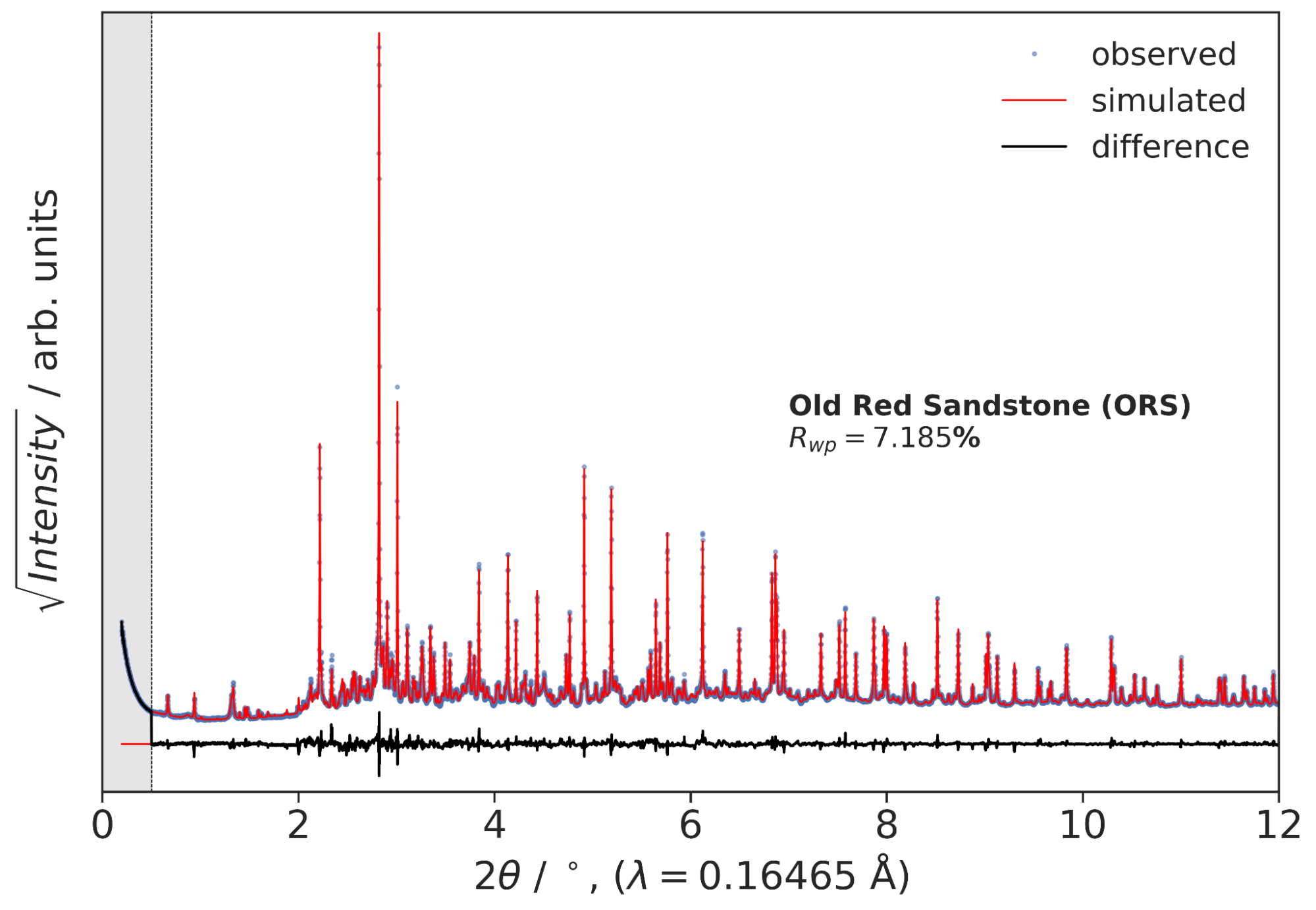
Challenges
-
Trace and disordered minerals
Detecting trace and/or disordered minerals in multicomponent mixtures is challenging. Standard lab instruments lack the resolution and sensitivity to reliably identify them.
-
Resolution and throughput
High-resolution and high signal-to-noise are required to improve sensitivity, while faster measurements are needed to achieve mine-scale quantitative assessments.
Example: Reynolds Cup mineral quantification
Clay-bearing mineral mixtures from the Reynolds Cup were measured using high-resolution X-ray powder diffraction and analyzed via state-of-the-art phase identification and quantification methodologies. High-resolution synchrotron X-ray diffraction measurements are performed at beamline ID31 at the European Synchrotron Radiation Facility (ESRF). Powders are loaded into cylindrical wells (approx. 1 mm thickness) and measured in transmission geometry with an incident X-ray energy of 75.050 keV (λ = 0.16520 Å) using a large area Pilatus4 CdTe 4M detector. NIST SRM 660b (LaB₆) is used for geometry calibration. Samples were mixed with NIST Si 640c as an internal reference for absolute phase quantification, including amorphous content. Semi-quantitative analysis can also be performed without an internal reference to obtain relative crystalline phase fractions.
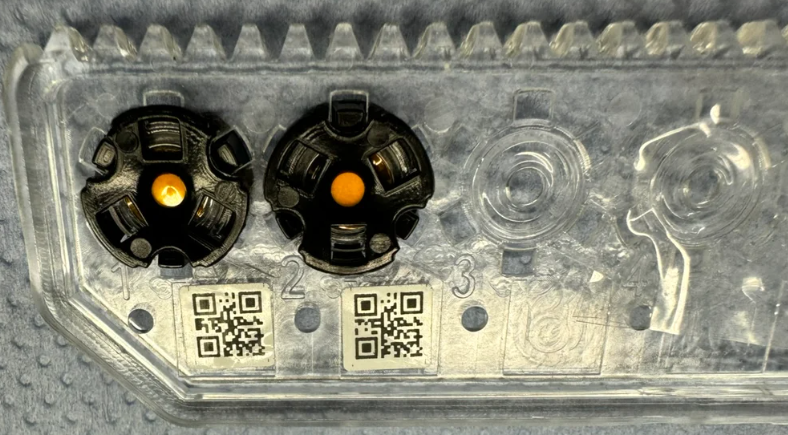
Powders loaded into the high-throughput well plates, measured in flat plate transmission geometry. Samples labeled by QR code are read during the measurement for sample identification.
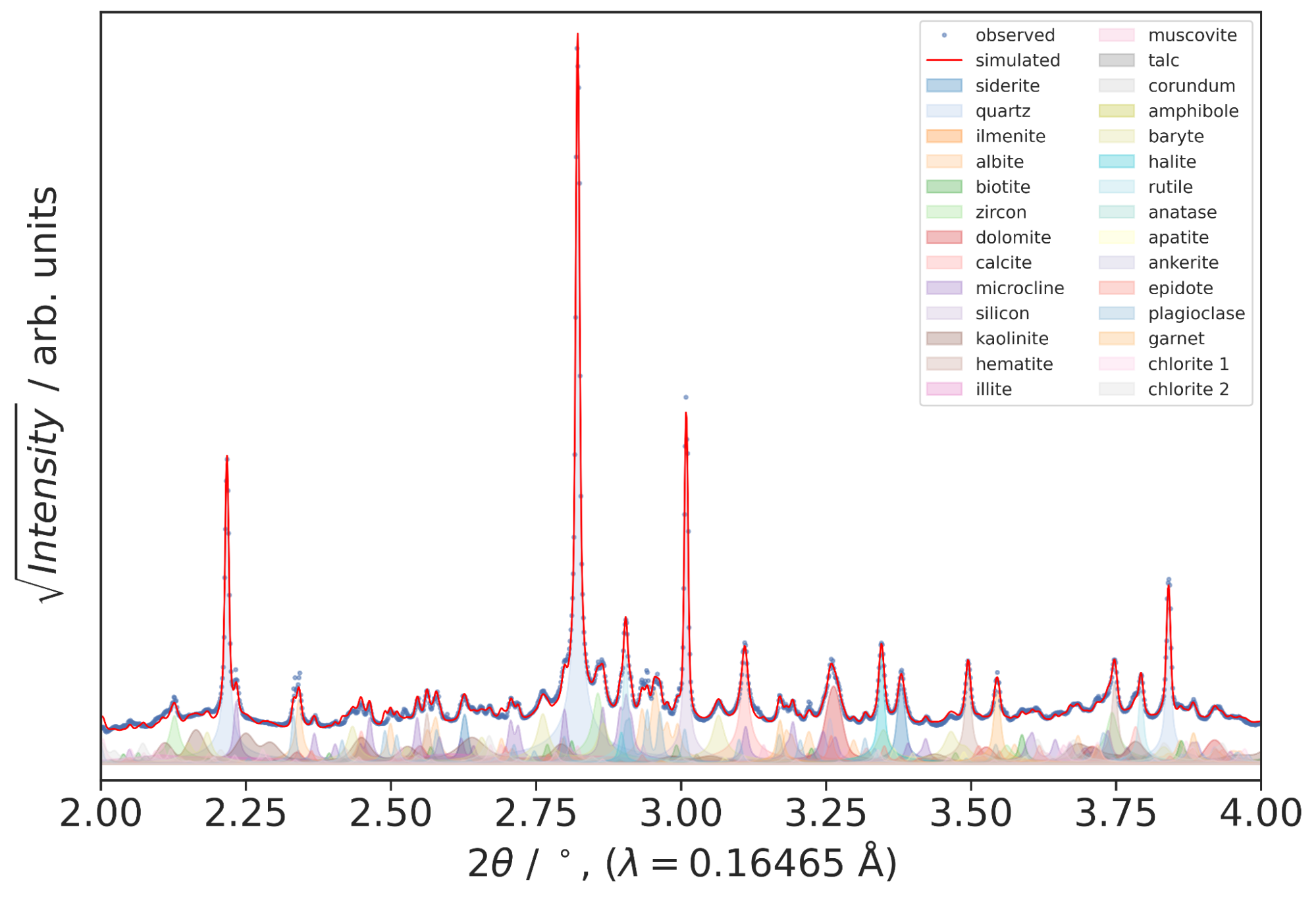
Left: resulting fit from quantitative whole pattern refinement with all features accounted for. Right: individual contributions from each mineral phase.
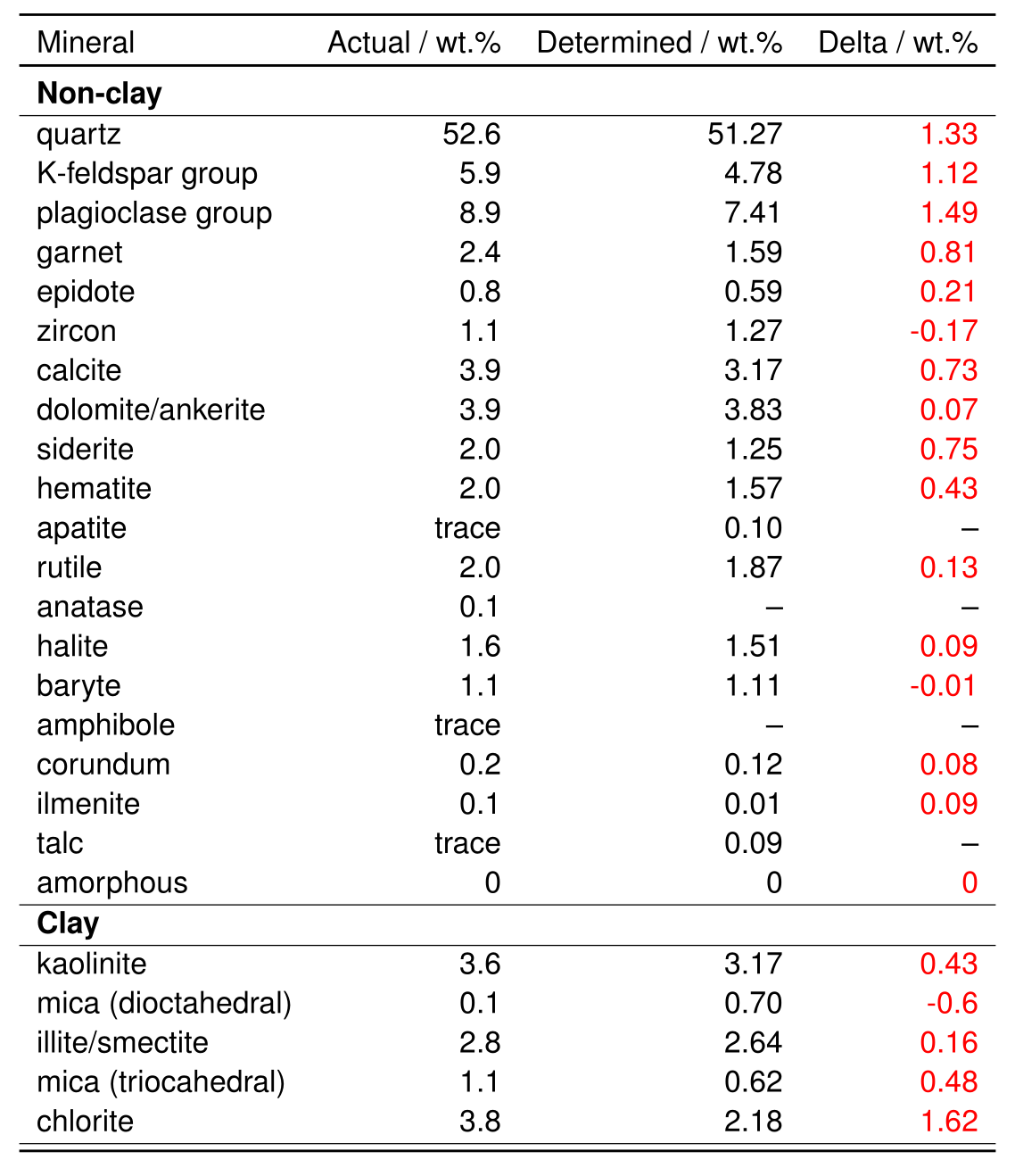
Example quantitative analysis of a sample produced for the 12th Reynold's Cup competition: the table shows the comparison of actual values in the reference mixture versus the determined values from the quantitative refinement, and quantification residuals. Silicon was added as an internal reference at 10 wt.%.
Benefits of our method
High-sensitivity and scalability of mineral detection and quantification
-
Minimized absorption
High-energy X-rays minimize absorption, enabling measurements even with heavy metals present.
-
Trace-level detection
4th generation synchrotron flux enables detection down to trace levels (ca. 0.01 wt%).
-
Ultra-high throughput
Ultra-high throughput measurements allow up to thousands of samples to be measured in a day.
Explore more applications
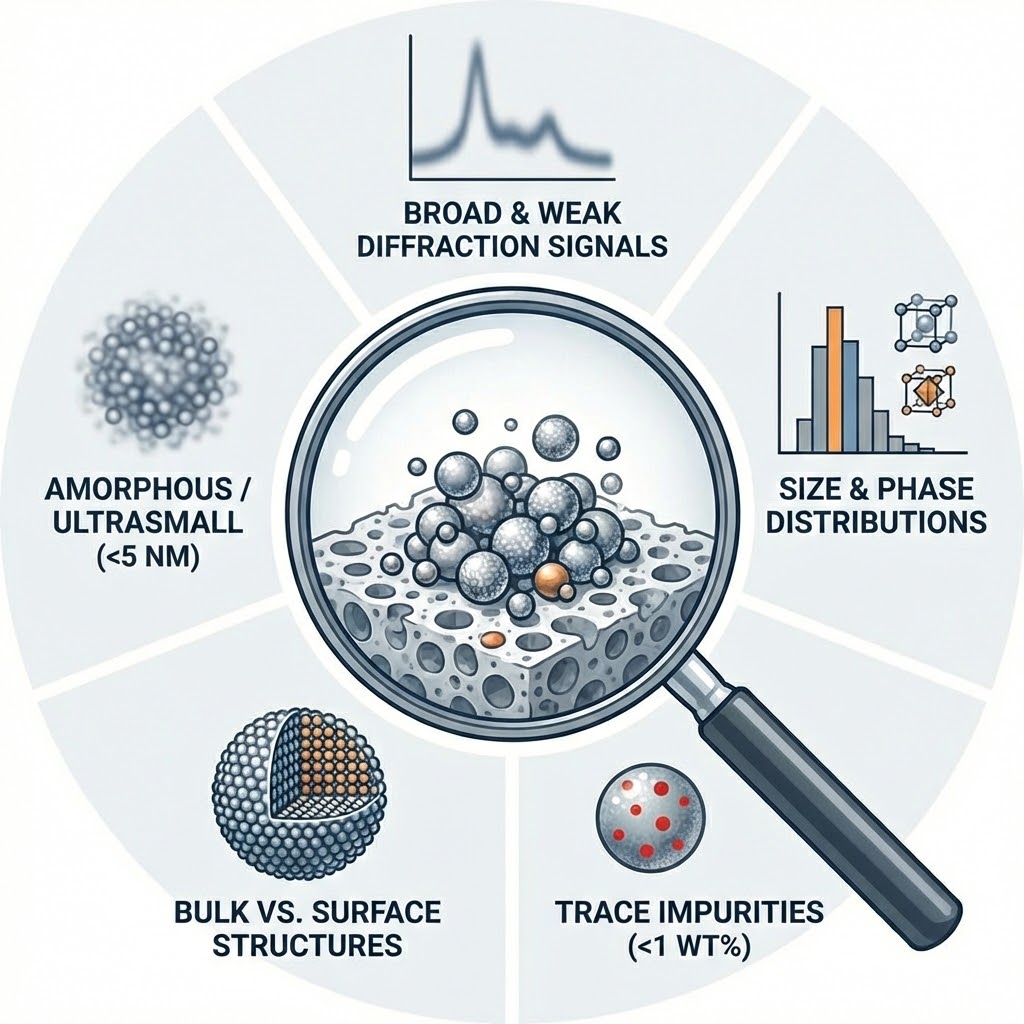
Nanocatalyst Phase Quantification
Phase identification & quantification for supported nanocatalysts
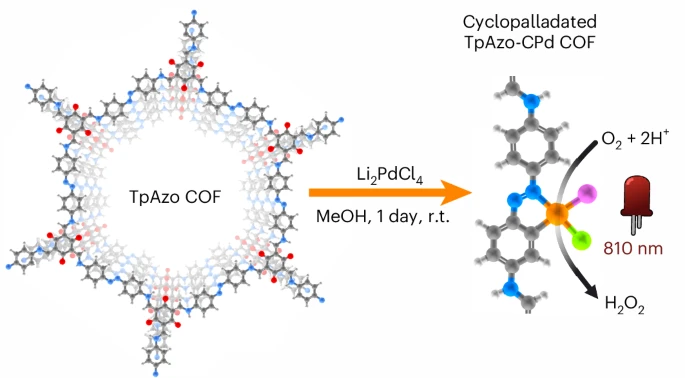
Single Atom Catalyst Detection
Detecting single atom catalysts via the difference pair distribution function method
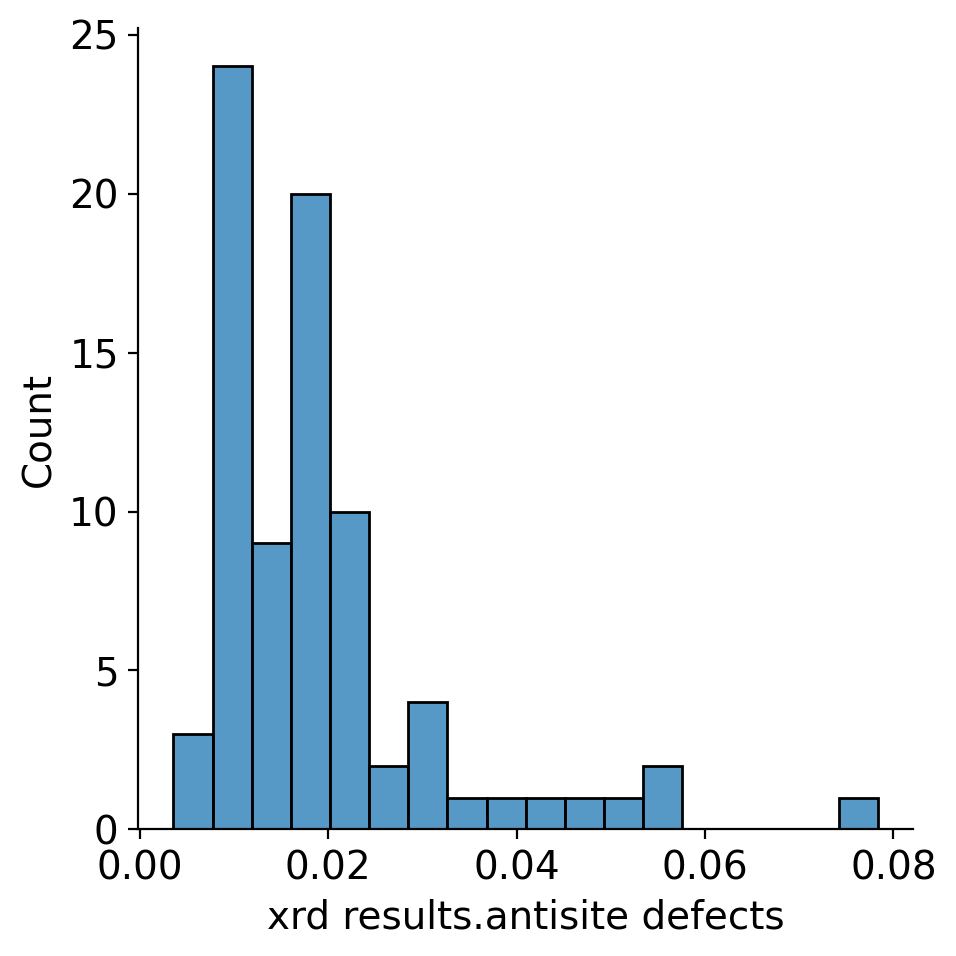
High-Throughput Battery Characterization
High-throughput characterization of battery materials
Ready to characterize your materials?
Get synchrotron-quality X-ray data for your application—no proposals, no beamline scheduling.